
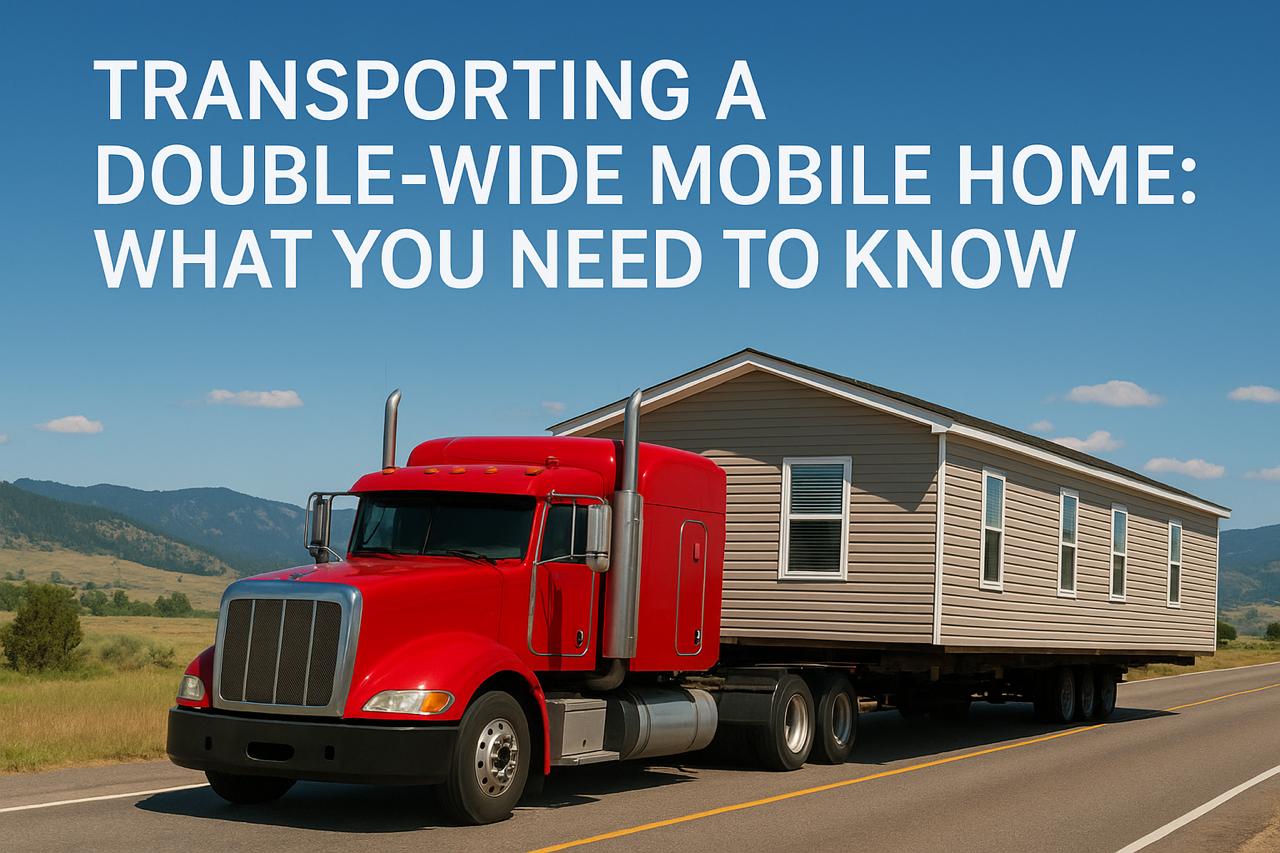
A double-wide mobile home is really two homes on the road and one home on the lot. It’s built as two sections that are joined at the site, so moving it means splitting it apart, hauling each half on its own truck and putting it back together at the new location. That extra work is why double-wide moves take more planning, more equipment and a more experienced crew than single-wides. This guide explains each step, what affects the cost and how to prepare.
Want it done for you? Our double-wide mobile home movers split, move and rejoin your home with one crew.
Why Double-Wide Moves Are Different
A double-wide is made of two sections, each on its own steel chassis, joined down the middle along what installers call the marriage line. Together they are often 20 to 32 feet wide, which is far too wide for any road, so the home has to travel in two pieces. That means:
- Two loads. Two toter trucks, two drivers and usually two sets of permits for every state on the route.
- Splitting and sealing. The sections are separated and each open side is sealed so weather and road wind don’t damage the inside.
- More escorts. Each half is still an oversize load, and pilot cars are more often required.
- Reassembly. At the new site, the halves must be lined up, joined and sealed so the roof, floors and walls meet properly.
How a Double-Wide Is Moved, Step by Step
1. Site visit and quote
The mover checks the home’s size, age and condition and both sites. A double-wide needs room to bring in two sections and position them side by side, so access at the new lot matters even more than for a single-wide.
2. Permits and route
The mover gets oversize-load permits for each section and each state, books escorts and plans a route that avoids low bridges, narrow roads and restricted areas. Your county may also want a tax receipt or moving permit before the home can leave.
3. Teardown and splitting
The crew removes skirting, steps, porches and decks and disconnects utilities. Inside, they separate the trim, flooring transitions and connections along the marriage line. Underneath, they disconnect the crossover ducts, plumbing and wiring that run between the halves. The roof cap is opened, the bolts or straps holding the sections together are removed, and each open side is covered with heavy plastic on a frame.
4. Preparing each half for the road
Each section is jacked up, the blocking is removed and axles and tires are fitted to the chassis if they were taken off at the last setup. Hitches are attached, lights are checked and each half is inspected before it leaves.
5. Transport
Each half is pulled on its own chassis by a toter truck. Pilot cars travel with the loads where the permit requires them. On a long move the sections often travel together, but they may arrive at slightly different times.
6. Reassembly and setup
At the new site the first half is set on piers and leveled. The second half is brought alongside and pulled tight to the first. The crew bolts the sections together, seals the roof and the marriage line, reconnects the crossover ducts, plumbing and wiring, and finishes the interior seams. The home is then anchored to the standards for your area’s wind zone, utilities are reconnected and skirting and steps go back on.
Good reassembly is what keeps a double-wide from leaking or developing gaps later. Read why you need movers who also handle setup.
How Much Does It Cost to Move a Double-Wide?
Most of our moves cost $2,000 to $15,000 for the whole job, and double-wides usually land in the middle to upper part of that range. You’re paying for two loads, two sets of permits, more escorts and a longer setup. The main price drivers are:
- Distance and route, including the number of states crossed.
- Section width. Wider sections need more permits and escorts.
- Site access at both ends, since two sections need to be positioned side by side.
- Condition. Older homes may need repairs before splitting or travel.
- Setup scope, including anchors, skirting, steps and finish work.
Our mobile home moving cost guide explains each factor and lists what a complete quote should cover.
Double-Wide Moving Checklist
Before you book
- Note your home’s year, size and serial numbers from the data plates. Double-wides have one per section.
- Confirm the new park or county accepts your home and has room for it.
- Ask movers how many double-wides they move and reassemble each year.
- Get complete quotes that include splitting, sealing, reassembly and setup.
- Have your title and tax receipt ready.
Preparing the home
- Move out valuables, fragile items and heavy furniture.
- Clear furniture away from the marriage line so the crew can work.
- Latch cabinets, doors and drawers, and take down wall hangings.
- Schedule utility shutoffs and start dates.
Preparing the new site
- Make sure the pad is big enough, level and drains well.
- Check access for two long, wide loads.
- Arrange water, sewer and power to the pad.
- Find out what installation permits and inspections the county requires.
See our full mobile home moving checklist for a week-by-week plan.
Mistakes That Cost Double-Wide Owners Money
- Hiring a hauler who doesn’t reassemble. Transport-only operators leave you to find someone to rejoin and seal the home, which can be hard to arrange and harder to fix if it’s done badly.
- Skipping the site check. Two sections need more room than people expect.
- Ignoring the roof seam. A poorly sealed marriage line is one of the most common sources of leaks after a move.
- Choosing the lowest bid. Compare what each quote covers. Read transport companies vs. local haulers.
What Can Go Wrong During Reassembly, and How It’s Prevented
Most problems after a double-wide move trace back to how the sections were put back together. An experienced crew watches for each of these:
- Uneven sections. If one half sits higher than the other, doors stick, floors creak and the roof seam pulls apart. The crew levels both halves to each other, not just to the ground.
- Gaps at the marriage line. Sections must be pulled tight before bolting. Gaps let in air, water and pests.
- Roof leaks. The roof seam is the most exposed joint. It’s sealed and covered with a ridge cap or roof membrane rated for the job.
- Disconnected ducts. A loose crossover duct under the home sends heated or cooled air into the crawl space. The crew connects, seals and supports it.
- Plumbing and wiring. Every crossover connection is reconnected and tested before skirting goes back on.
Moving a Double-Wide Out of State
An out-of-state move adds a few things to plan for:
- Permits for every state on the route, for each section, with different width limits and escort rules in each.
- Travel restrictions. Many states limit oversize loads to daylight hours and weekdays, and some restrict travel on holidays or in bad weather.
- Installation rules in the destination state, including its wind zone and installer licensing requirements.
- Title and registration. You may need to retitle the home or register it with the new county.
A mover that works across many states will know these rules and build them into the schedule and quote.
Getting the New Lot Ready for a Double-Wide
A double-wide pad has to fit both sections side by side, with room for the truck to deliver each half separately. Make sure the ground is level and firm across the full width, mark where the marriage line will fall, and confirm the utility connections line up with the home’s hookups.
Frequently Asked Questions
Can a double-wide be moved without splitting it?
No. The combined width is too great for public roads, so the sections must be separated and moved as two loads.
How long does a double-wide move take?
Teardown, transport and reassembly for a local move usually take a few days. Permits, distance, weather and inspections add time, so plan four to eight weeks from booking to move-in.
Will my double-wide be damaged by the move?
Some small drywall cracks or trim gaps are common and are usually fixed during setup. Careful splitting, sealing and reassembly by an experienced crew keeps the risk of real damage low.
Can a triple-wide be moved?
Yes. It follows the same process with a third section, which adds a truck, permits and setup time.
Do both halves have to travel on the same day?
Usually they do, so setup can start right away. Permits, escorts or weather can sometimes split the trip, and the mover will plan for that.
Can my double-wide be moved to another state?
Yes. The mover gets permits for each section in each state and sets the home up to the rules where it lands.
Get a Free Double-Wide Moving Quote
Tell us about your home and both locations through our free quote form. Our own crews split, move and reassemble double-wides and handle permits and setup. See all our mobile home moving services, or compare with single-wide transport.
Planning a mobile home move?
Tell us about your home and where it’s going. We’ll reply with a full price for the whole job, permits and setup included.