
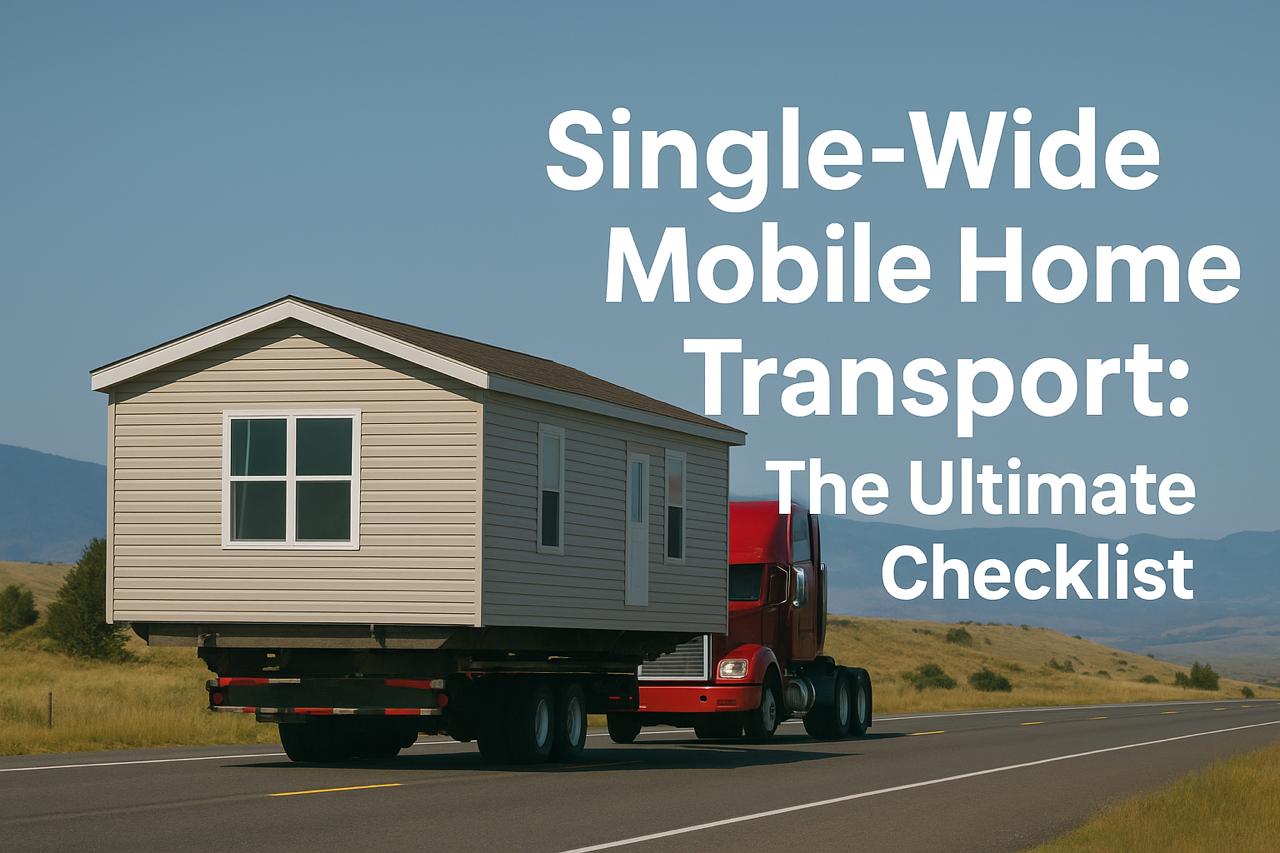
A single-wide is the simplest kind of mobile home to move: one section, one truck and no splitting or rejoining at the new site. Simple doesn’t mean casual, though. A single-wide is still an oversize load that needs permits, the right equipment and a proper setup when it arrives. This guide covers how single-wide transport works, what it costs, and a checklist to get your home moved safely.
Want it done for you? Our single-wide mobile home movers handle permits, transport and setup in one quote.
What Makes a Single-Wide Different to Move
A single-wide is built as one section on a steel chassis, usually 14 to 18 feet wide and up to about 80 feet long. Because it’s one piece, it travels as one load, which keeps the move faster and cheaper than a double-wide. But its size still puts it well over normal road limits, so:
- Permits are always required to move it on public roads, with one for each state on the route.
- Pilot cars may be required depending on the home’s width, the roads and the state. Wider single-wides are more likely to need escorts.
- The route matters. Low bridges, narrow roads, tight turns and city limits on oversize loads all shape the path.
- Setup still takes skill. The home must be blocked, leveled and anchored to the standards for your area.
How Single-Wide Transport Works
1. Quote and site check
The mover looks at the home, the current site and the new one. They check the home’s size, age and condition, and whether a truck can get in and out at both ends.
2. Permits and route planning
The mover applies for oversize-load permits, plans a route the home can legally travel and books pilot cars if they’re needed. Your county may also need a tax receipt or moving permit before the home can leave.
3. Teardown
On moving day the crew removes skirting, steps and porches, disconnects utilities and releases the tie-downs. The home is jacked up, the blocking is removed and axles and tires are fitted to the chassis if they were taken off at the last setup. A hitch is attached and the home is checked for the road.
4. Transport
The home is pulled on its own chassis by a toter truck, a heavy truck built for hauling manufactured homes. It isn’t loaded onto a trailer. Escorts travel with it where required, and the driver follows the permitted route and travel hours.
5. Setup at the new site
The home is backed onto the pad, set on piers, leveled and anchored. Utilities are reconnected, and skirting and steps are reinstalled. Many counties require an inspection before you can move back in.
Single-Wide Moving Checklist
Planning
- Find the home’s data plate and note the year it was built and its size.
- Confirm the new park or county accepts your home.
- Get two or three complete quotes that cover teardown, permits, transport and setup.
- Check each mover’s insurance and any license your state requires.
- Have your title and tax receipt ready.
Preparing the home
- Remove valuables, fragile items and heavy furniture.
- Latch or tape cabinets, doors and drawers.
- Take down mirrors, wall art and hanging fixtures.
- Schedule utility shutoffs at the old address and start dates at the new one.
- Remove any sheds, carports or decks you plan to keep, or confirm the mover will handle them.
Preparing the new site
- Clear and level the pad and make sure it drains.
- Check access for a long load: trees, fences, power lines, turns and soft ground.
- Arrange a plumber and electrician to bring water, sewer and power to the pad.
- Find out what permits and inspections the new county requires.
After setup
- Test water, power, gas, heating and cooling.
- Check that doors and windows open and close smoothly.
- Look for new cracks or leaks and report them right away.
- Keep copies of permits, inspection reports and receipts.
For a step-by-step timeline, use our full mobile home moving checklist.
How Much Does It Cost to Move a Single-Wide?
Most of our moves cost $2,000 to $15,000 for the whole job, and single-wides usually sit toward the lower part of that range. A short local move with easy access and basic setup is at the low end. The price rises with:
- Distance and fuel, especially for moves out of state.
- Width and length. Wider homes need more permits and are more likely to need escorts.
- Site access. Tight parks, steep drives and soft ground take longer.
- Condition. Missing axles or tires, frame repairs or a weak roof add work.
- Setup scope. New anchors, skirting, steps and utility work all add to the total.
Read our full mobile home moving cost guide for what a complete quote should include.
Single-Wide vs. Double-Wide: What Changes
| Single-wide | Double-wide | |
|---|---|---|
| Sections | One | Two |
| Trucks | One | Two |
| Splitting and rejoining | Not needed | Required |
| Permits | One per state | One per section, per state |
| Typical cost | Lower part of the range | Middle to upper part |
| Setup time | Shorter | Longer |
Moving a double-wide instead? See transporting a double-wide mobile home.
Tips for a Smooth Single-Wide Move
- Book four to eight weeks ahead so permits and your preferred date line up.
- Get the new site ready first. A home that arrives at an unready lot costs time and money.
- Keep moving and setup with one company. One crew is responsible for the whole result.
- Don’t hire a tow truck. A standard tow operator doesn’t have the permits, equipment or insurance. Read towing vs. transport.
- Ask about the axles and tires. If they were removed at the last setup, confirm the mover will supply them.
Moving an Older Single-Wide
Many single-wides on the road today are 20, 30 or 40 years old. Age alone doesn’t rule out a move, but an older home needs a closer look first:
- Frame and outriggers. Rust or bent steel can weaken the chassis. The crew checks the frame before the home is lifted.
- Floors. Soft spots near bathrooms, the kitchen or exterior doors may need repair so the floor can handle the trip.
- Roof and walls. Old roofs and loose siding can lift in road wind. Loose panels are fastened and weak areas reinforced.
- Running gear. Original axles and tires are rarely safe after decades in storage. Most movers supply road-ready axles and tires for the trip.
- Paperwork. Homes built before June 1976 may face limits in some states, counties and parks. Ask before you book.
An honest mover will tell you if a home isn’t worth moving. Sometimes repairs cost more than the move, and it’s better to know that before you start.
What Moving Day Looks Like
A typical local single-wide move runs like this:
- Morning: the crew arrives, removes skirting and steps, checks that utilities are off and releases the tie-downs.
- Midday: the home is jacked up, blocking is removed, running gear and hitch are fitted and lights are connected.
- Afternoon: the home leaves with escorts if needed and follows the permitted route.
- At the new lot: the home is positioned and set on temporary blocking. Full setup, leveling and anchoring follow the same day or the next.
Long-distance moves follow the same steps, with travel spread over permitted hours and days.
Getting the New Lot Ready for a Single-Wide
A single-wide needs a straight, firm path to its pad and enough room for the truck to swing in. Mark where the home should sit, measure the distance to the water, sewer and power connections, and clear a path at least a few feet wider than the home. Gravel soft spots and trim low branches before moving day.
Frequently Asked Questions
How long does it take to move a single-wide?
The teardown, drive and setup for a local move can often be done in one to three days. Permits, distance, weather and inspections can add time, so plan four to eight weeks from booking to move-in.
Can I move a single-wide myself?
We don’t recommend it. You would need oversize-load permits, a suitable truck, escorts where required and insurance, and setup must meet local installation rules. Mistakes can damage the home or lead to fines.
Do I need a permit to move a single-wide a short distance?
Yes, if it travels on public roads. Even a move of a few miles needs an oversize-load permit, and many counties also require a moving permit or tax receipt.
Can an old single-wide be moved?
Often, yes, if it’s in good condition. Homes built before June 1976 may face limits from some states, counties or parks, so check the rules at the new location first.
Should I be there on moving day?
It helps to be there at the start to walk through the home with the crew and at the new lot to confirm placement. You don’t need to stay for the whole teardown or setup.
Will my furniture be safe inside?
Light, secured furniture can usually stay. Take out heavy items, valuables and anything fragile, and latch cabinets and doors so nothing moves on the road.
Get a Free Single-Wide Moving Quote
Tell us your home’s size, where it is and where it’s going through our free quote form. We handle permits, transport and setup with our own crews. See all our mobile home moving services.
Planning a mobile home move?
Tell us about your home and where it’s going. We’ll reply with a full price for the whole job, permits and setup included.