
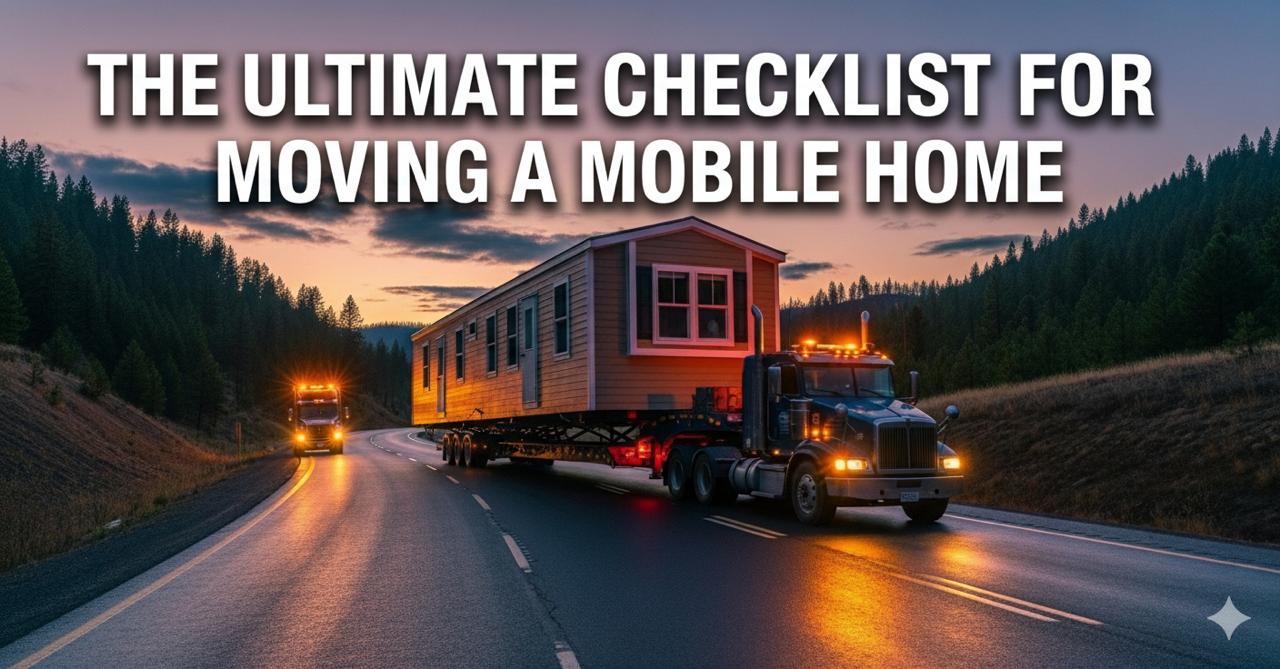
Moving a mobile home takes more planning than moving the things inside it. The home needs permits, a cleared route, a ready site at the other end and a crew that can tear it down and set it back up properly. This checklist walks you through every step in order, from the first quote to the first night in your home at its new location. Most moves take four to eight weeks from first call to setup, so start early.
Before You Start: Can Your Home Be Moved?
Most manufactured homes can be moved, but check three things before you book anything:
- Age. Homes built before the HUD Code took effect in June 1976 may be refused by some states, counties or parks. Find the build date on the data plate, usually inside a kitchen cabinet or bedroom closet.
- Condition. Soft floors, a rusted frame or a sagging roof may need repairs before the home can travel safely.
- Where it’s going. Confirm that the new park or county accepts your home’s age, size and type, and get any approval in writing.
6–8 Weeks Before the Move
Step 1: Get quotes from qualified movers
- Contact movers who handle mobile homes as their main business, not general haulers.
- Ask each one to quote the whole job: teardown, permits, escorts, transport and setup.
- Confirm they carry insurance and any license your state requires for transport and installation.
- Compare quotes line by line. Our mobile home moving cost guide lists what a complete quote should include.
Not sure what to look for? Read how to choose a licensed mobile home mover.
Step 2: Gather your paperwork
- Title or proof of ownership. If there’s a loan on the home, ask your lender whether it must approve the move.
- Tax receipt. Many counties won’t issue a moving permit until property taxes for the year are paid.
- Park paperwork. Give notice at your current park and get approval from the new one.
- Insurance. Tell your homeowner’s insurer about the move and ask how the home is covered in transit.
Step 3: Book your date
Spring and summer book up first. If your dates are flexible, late fall and winter often have more openings. Leave room for permits, which can take days or weeks depending on the state.
4–6 Weeks Before the Move
Step 4: Confirm permits and the route
Every state requires an oversize-load permit to move a mobile home on public roads, and a move across state lines needs a permit for each state. Wider homes may also need pilot cars or a police escort. A full-service mover gets these permits and plans the route around low bridges, narrow roads and travel-time limits. Ask your mover to confirm when each permit is approved.
Step 5: Prepare the new site
- Clear and level the pad, and make sure the ground drains away from where the home will sit.
- Check that a truck pulling a long, wide load can get in: watch for trees, fences, power lines, tight turns and soft ground.
- Arrange any pad, runners or foundation work your county or park requires.
- Book a plumber and electrician to run water, sewer and power to the pad if they aren’t there yet.
- Check local rules for setbacks, permits and inspections at the new address.
1–2 Weeks Before the Move
Step 6: Pack and secure the inside
- Move fragile items, electronics, valuables, documents and medicine out of the home. Take them with you.
- Pack heavy items separately or move them out. Heavy loads strain the floor and frame on the road.
- Tape or latch cabinet doors and drawers, and secure anything that could slide or fall.
- Take down mirrors, pictures and ceiling fixtures that could swing.
- Empty the refrigerator and freezer, and prop the doors open after cleaning.
Step 7: Schedule utility shutoffs and transfers
Arrange for power, gas, water, internet and trash service to end at the old address and start at the new one. Gas and power must be disconnected safely before the home is moved; your mover will tell you what they handle and what the utility company must do.
Moving Day
Step 8: Teardown
The crew removes skirting, steps, decks and porch attachments, disconnects the home from utilities and releases the anchors and tie-downs. The home is jacked up, the blocking is removed and axles and tires are fitted to the chassis if they were taken off after the last setup. A double-wide is split along the marriage line and each open side is sealed with heavy plastic for the road.
Step 9: Transport
The home is hitched to a toter truck and travels on its own steel chassis. Pilot cars ride ahead and behind when the permit calls for them. Movers follow the approved route and travel times, so a long move may take more than one day.
At the New Site
Step 10: Setup
- The home is positioned on the pad, blocked on piers and leveled.
- Anchors and tie-downs are installed to the standards for your area’s wind zone.
- Double-wide sections are joined, sealed and connected inside and underneath.
- Skirting, steps and any agreed attachments are reinstalled.
See why moving and setup belong with one crew.
Step 11: Reconnect utilities and pass inspection
Water, sewer, power and gas are reconnected, then many counties require an inspection before the home can be lived in. Test every faucet, outlet, appliance and the heating and cooling before you move back in.
Step 12: Do a final walkthrough
- Check doors and windows. They should open and close smoothly if the home is level.
- Look for new cracks in drywall or ceilings and any leaks.
- Take photos of the finished setup and keep every receipt, permit and inspection report together.
- Update your address with the post office, your bank, your insurer and the county.
Common Mistakes to Avoid
- Booking only the haul. A home dropped on a lot with no setup can’t be lived in or insured until someone finishes the job.
- Skipping the site check. A truck that can’t reach the pad means delays and extra charges.
- Leaving heavy furniture inside. Extra weight can damage floors and walls during the move.
- Forgetting the tax receipt. A missing tax certificate is one of the most common reasons permits are delayed.
- Choosing on price alone. The cheapest bid often leaves out permits, escorts or setup. Read towing vs. transport before you decide.
Budget for the Move
Most of our moves cost $2,000 to $15,000 for the whole job. Where yours lands depends on the size of the home, the distance, permits and escorts, site access and how much setup you need. Set aside a little extra for work outside the move itself, such as pad preparation, utility hookups at the new lot and park fees.
Moving Into a Park vs. Onto Private Land
Where the home is going changes a few steps on the checklist.
- Into a park: get written approval before you book the move. Ask about age limits, size limits, skirting and step rules, required inspections and which installers the park allows. Confirm the lot number, the pad size and where the utility hookups are.
- Onto private land: check zoning and setback rules with the county, find out whether a building or installation permit is needed, and plan water, septic or sewer and power to the site. A new pad, driveway or gravel turnaround may be needed before a truck can deliver.
In both cases, walk the access route with your mover if you can. Low wires, tight gates and soft ground are much easier to fix before moving day than during it.
Frequently Asked Questions
How far ahead should I plan a mobile home move?
Four to eight weeks is a good target. That leaves time to compare quotes, get permits, prepare the new site and book a date that works.
Can I stay in my mobile home while it’s being moved?
No. Nobody may ride inside a mobile home on the road, and the home will be without utilities from teardown until setup is finished. Plan to stay somewhere else for a few days.
Do I need to empty my mobile home before moving it?
Not completely, but take out valuables, fragile items and heavy furniture, and secure everything else so it can’t move. Your mover will tell you what can stay inside.
Who gets the moving permits?
A full-service mover gets the transport permits and arranges escorts. You’ll usually need to supply the title and tax receipt, and handle park approvals yourself.
How long does the move itself take?
For a local move, teardown, transport and setup usually take one to three days for a single-wide and a few days for a double-wide. Long-distance moves, inspections and utility work add time.
Ready to Plan Your Move?
Tell us about your home and where it’s going through our free quote form. We handle permits, transport and setup with our own crews. See everything we do on our mobile home moving services page.
Planning a mobile home move?
Tell us about your home and where it’s going. We’ll reply with a full price for the whole job, permits and setup included.