
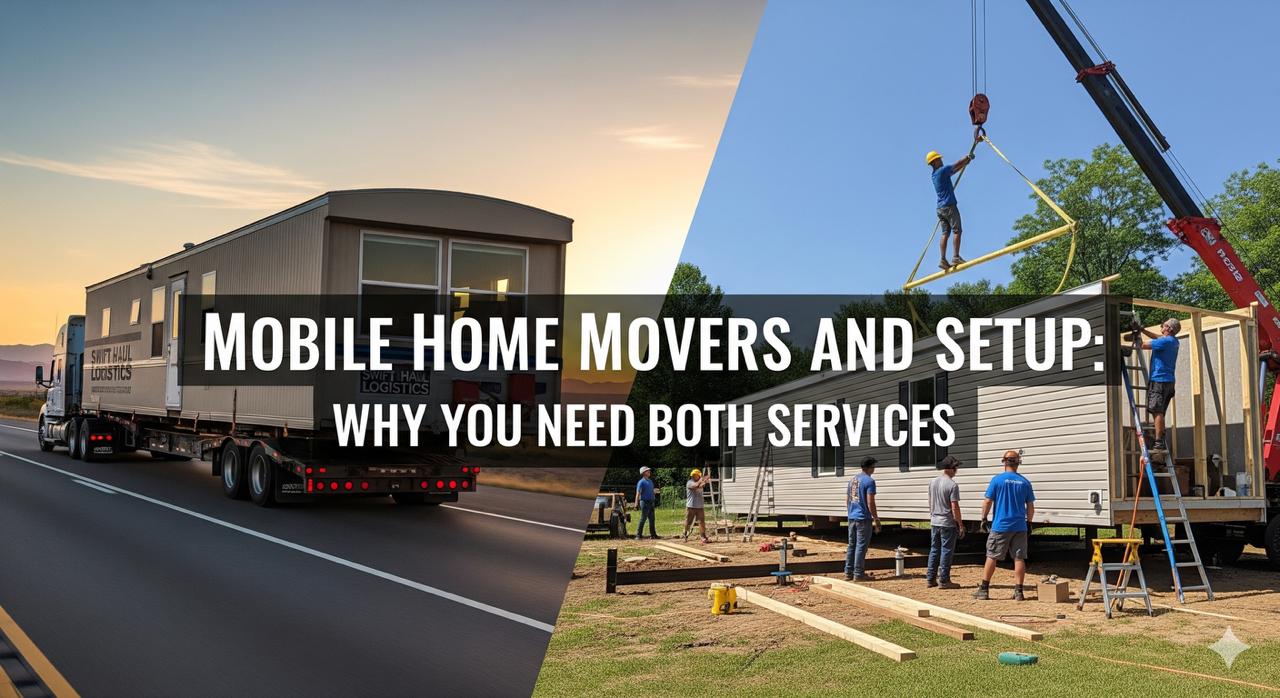
Getting a mobile home to its new lot is only half the job. Until it’s blocked, leveled, anchored and reconnected, it isn’t safe to live in and usually can’t pass inspection. That’s why the best way to move a mobile home is with a full-service company whose crews handle both the move and the setup. This guide explains what a complete relocation service includes, what setup involves and why keeping both jobs with one team saves money and trouble.
See our mobile home setup and installation service for everything our crews do at the new site.
What Is a Full-Service Mobile Home Relocation?
A full-service relocation covers every step from the old lot to move-in day:
- Planning: site visits, a written quote and a moving date.
- Permits and escorts: oversize-load permits for every state on the route, plus pilot cars where required.
- Teardown: removing skirting, steps and porches, disconnecting utilities and releasing anchors.
- Splitting: separating and sealing multi-section homes.
- Transport: toter trucks, running gear and insurance for the drive.
- Setup: blocking, leveling, anchoring, rejoining sections, reconnecting utilities and reinstalling skirting.
- Inspection: making sure the installation is ready for the county’s sign-off.
A transport-only hauler covers step 5 and maybe part of step 3. Everything else falls to you.
What Mobile Home Setup Involves
Setup, also called installation, is skilled work that most states require a licensed installer to do. It follows your state’s installation rules or HUD’s federal installation standards. Here’s what happens:
Positioning on the pad
The home is backed onto the prepared site and lined up with the utility connections and setbacks.
Blocking and piers
The home is lifted and set on piers placed under the steel frame at set spacings, on footings or pads sized for your soil. For double-wides, extra piers support the marriage line where the sections meet.
Leveling
The installer levels the home along its length and width. A level home keeps doors and windows working, stops pipes from draining badly and spreads weight evenly over the frame.
Anchoring
Ground anchors and steel straps tie the frame to the ground so the home resists wind. The number and spacing depend on the home’s wind zone, which is listed on its data plate, and on local rules. Proper anchoring is required for inspection and often for insurance.
Joining sections
For double-wides and larger homes, the sections are pulled together and bolted, the roof seam is sealed, the crossover ducts, plumbing and wiring are reconnected underneath, and the interior seams are finished.
Utilities
Water, sewer, power and gas are reconnected and tested. If the new lot doesn’t already have service run to the pad, a local plumber or electrician usually brings it there first.
Skirting, steps and finishing
Skirting is reinstalled to close in the underside, and steps and agreed attachments are put back. Small drywall cracks from the trip are touched up.
Inspection
Many counties inspect the installation before you can move in. A licensed installer knows what inspectors check and sets the home up to pass.
Why Movers and Setup Belong Together
- One point of responsibility. If the home arrives with damage or a problem shows up after setup, there’s no argument between a hauler and an installer about who caused it.
- No gaps in the schedule. The crew that delivers the home can start setup the same day or the next, instead of the home sitting on the lot waiting for an installer.
- Better results. The crew that split a double-wide knows exactly how it should go back together.
- Fewer surprise costs. One quote covers the whole job, so you’re not paying a second company’s rates on short notice.
- Easier inspections. Licensed installers set up the home to meet local rules the first time.
Is Full-Service Worth the Cost?
Most of our full-service moves cost $2,000 to $15,000 for the whole job, depending on home size, distance, permits and escorts, site access and setup. Transport-only quotes can look lower, but once you add a separate installer, permits, escorts and the risk of delays, the total is often similar or higher. Our mobile home moving cost guide lists what a complete quote should include so you can compare fairly.
Full-service is especially worth it if:
- Your home is a double-wide, triple-wide or modular home.
- You’re moving out of state or a long distance.
- Your park, lender or insurer requires a licensed installer.
- You don’t have time to coordinate several contractors.
What You May Still Need to Arrange
Even with a full-service mover, a few things are usually your job:
- Park approvals and lot rent at the new location.
- Running utilities to the pad if they aren’t already there.
- Pad or foundation work your county requires before the home arrives.
- Utility account transfers, address changes and insurance updates.
Our mobile home moving checklist puts all of this in order.
How to Choose a Mover That Handles Setup
- Ask whether setup is done by their own crews or subcontracted.
- Check the installer license for the state where your home is going.
- Get a written quote that lists blocking, leveling, anchoring, joining sections, utilities and skirting.
- Ask about inspections and what happens if the home doesn’t pass.
- Read reviews that mention how the home held up after the move.
See our guide to choosing a licensed mobile home mover, and why towing isn’t the same as transport.
Signs a Mobile Home Wasn’t Set Up Properly
A poor setup often shows up within weeks of the move. Watch for:
- Doors and windows that stick, swing on their own or won’t latch.
- New cracks spreading from the corners of doors and windows.
- Floors that slope, bounce or creak in new places.
- Gaps or water stains along the marriage line of a double-wide.
- Weak airflow from vents, which can mean a disconnected crossover duct.
- Loose or missing tie-down straps under the home.
Small cracks are common after any move and are usually cosmetic. Report anything that’s getting worse to your installer right away.
Your First Month After Setup
- Walk around and under the home after the first heavy rain and check for standing water or leaks.
- Check that doors and windows still work smoothly after a few weeks, as the home settles.
- Test the heating, cooling and water heater under normal use.
- Keep the inspection report, installer details and anchor information with your home records. Your insurer may ask for them.
- Ask your installer when the piers and level should be checked again. Settling in the first year is normal on new pads.
Setup After a Long-Distance Move
When a home moves to another state, setup has to meet the destination state’s rules, not the old ones. That can change the anchoring required, the installer license needed and the inspection process. If your home is moving to a higher-wind area, check the wind zone on its data plate: a home built for zone I can’t be installed in zone II or III. A full-service mover checks this before the move, so you don’t find out after the home arrives.
Frequently Asked Questions
What does mobile home setup include?
Positioning, blocking, leveling, anchoring, joining multi-section homes, reconnecting utilities, reinstalling skirting and preparing for inspection.
Does setup need a licensed installer?
In most states, yes. Installation must meet state or federal standards, and many counties inspect it before you move in.
How long does setup take?
A single-wide often takes a day or two. Double-wides take longer because the sections must be joined and sealed. Inspections and utility work can add time.
Can I hire a mover and a separate installer?
You can, but you’ll coordinate two schedules and two quotes, and it can be hard to tell who is responsible if something goes wrong. One full-service company is simpler.
What is a wind zone?
HUD divides the country into wind zones I, II and III. Your home’s zone is on its data plate, and it decides how strongly the home must be anchored. A home can be installed in its own zone or a lower one, but not a higher one.
What if my home was set up badly by someone else?
A licensed installer can inspect it, re-level and re-block it, add or replace anchors and reseal sections. Fixing problems early stops small issues from turning into structural damage.
Is setup included in your quotes?
Yes. Our quotes include teardown, permits, transport and setup by our own crews, so the price covers the whole job.
Get One Quote for Moving and Setup
Our own crews handle permits, transport and licensed setup, so one company is responsible from start to finish. Tell us about your move through our free quote form or see all our mobile home moving services.
Planning a mobile home move?
Tell us about your home and where it’s going. We’ll reply with a full price for the whole job, permits and setup included.