
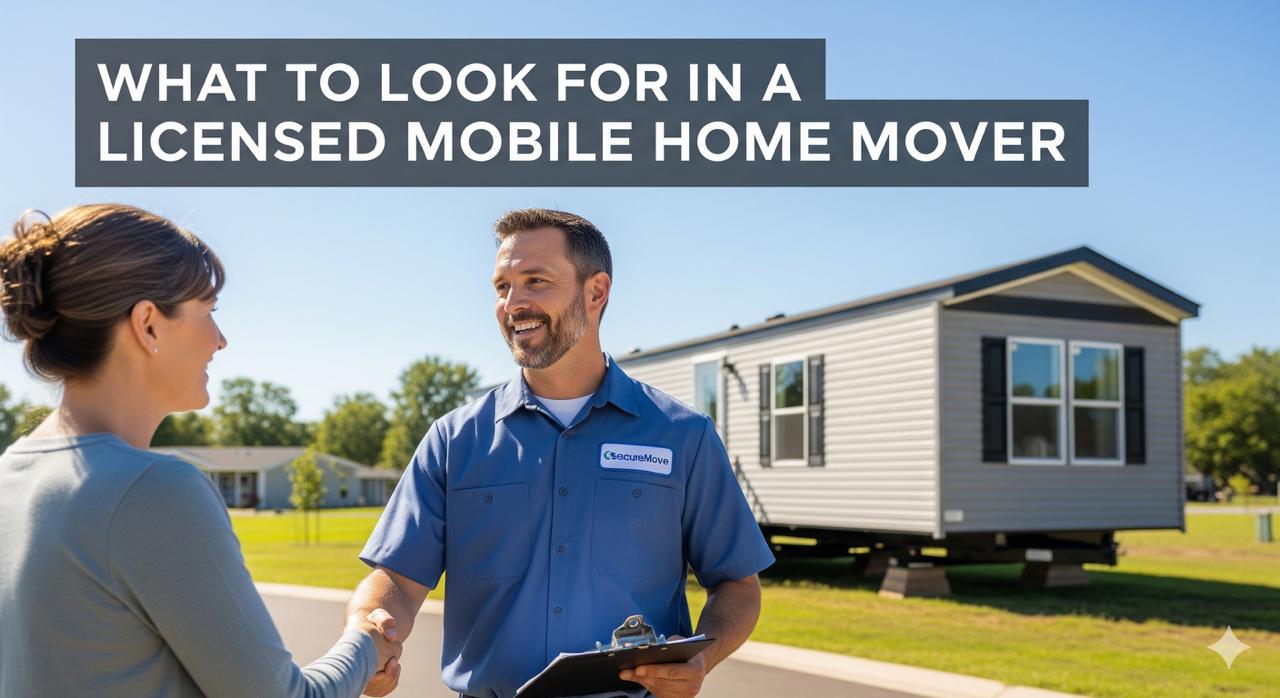
Who moves mobile homes? Plenty of people will offer to, from local haulers with a truck to full-service moving companies. The difference shows up in the details: permits, insurance, the right equipment and a proper setup at the new site. This guide explains who moves mobile homes, what licensing actually means for this work and how to check a mover before you sign anything.
Who Moves Mobile Homes?
There are three main kinds of businesses that move mobile homes:
| Full-service moving company | Transport company | Local hauler | |
|---|---|---|---|
| Permits and escorts | Included | Usually included | Often left to you |
| Teardown | Included | Sometimes | Rarely |
| Transport | Included | Included | Included |
| Setup and installation | Included | Usually not | No |
| Long-distance moves | Yes | Yes | Rarely |
| Best for | Most moves | Owners who have hired a separate installer | Short, simple moves where you handle the rest |
For most homeowners, a full-service company is the safest choice because one business is responsible for the whole job. Read transport companies vs. local haulers for a closer comparison.
What “Licensed” Means for Mobile Home Movers
There isn’t one national license for moving mobile homes. Depending on the work and where it happens, a mover may need several kinds of credentials:
- Federal operating authority. Companies that haul for hire across state lines need a USDOT number and, in most cases, operating authority from the Federal Motor Carrier Safety Administration. You can look up any USDOT number on the FMCSA’s public SAFER website.
- State transport rules. Each state issues its own oversize-load permits, and some states also register or license manufactured home transporters.
- Installer license. Most states require manufactured homes to be installed by a licensed installer, under a state program or HUD’s federal program. This covers blocking, leveling, anchoring and joining sections.
- Local business licenses and any permits your county requires for the move or the installation.
- Insurance. Not a license, but just as important: liability insurance and coverage for the home while it’s in the mover’s care.
Ask each mover which of these apply to your move and how they meet them.
Why Licensing and Insurance Matter
- Legal moves. A home moved without the right permits can be stopped on the road, and you may face fines or delays.
- Safe setup. A home installed by an unlicensed crew may fail county inspection or fail to meet wind-zone anchoring rules, which can affect your insurance.
- Protection if something goes wrong. If an uninsured hauler damages your home, recovering the cost can be difficult or impossible.
- Accountability. A registered company has a record you can check and a reputation to protect.
How to Vet a Mobile Home Mover: 7 Steps
1. Check credentials
Ask for the company’s USDOT number if it crosses state lines, its installer license number and its certificate of insurance. Look up the USDOT number on SAFER and the installer license with your state’s licensing office. A good mover sends these without hesitation.
2. Ask about experience with your home type
Single-wides, double-wides and modular homes need different skills. Ask how many homes like yours the company moves each year, and whether its own crews do the setup. See the differences in modular vs. manufactured home moving.
3. Read reviews and ask for references
Look for reviews that mention setup quality, leaks after the move, communication and whether the final price matched the quote. Ask for a recent customer you can talk to.
4. Get a written, itemized quote
A complete quote should cover teardown, permits, escorts, transport, splitting and rejoining for multi-section homes, setup and insurance. Our mobile home moving cost guide lists each item. Most of our moves cost $2,000 to $15,000 for the whole job.
5. Ask who does the work
Some companies subcontract transport or setup. That isn’t always a problem, but you should know who will be on site and who is responsible if something goes wrong.
6. Confirm the timeline
Ask how long permits take in your state, when the mover can schedule you and how weather or permit delays are handled.
7. Read the contract
Check what’s included, the payment schedule, the cancellation terms and how damage claims work. Don’t pay the full price up front.
Questions to Ask Before You Hire
- Do you handle permits and escorts for every state on my route?
- Are your installers licensed in the state where my home is going?
- Does your quote include teardown, transport and full setup?
- What insurance covers my home during the move?
- Will you supply axles and tires if my home doesn’t have them?
- What happens if there’s damage?
- When will the home be ready to live in?
Red Flags to Avoid
- No proof of insurance, or a USDOT number that doesn’t match the company name.
- A price far below every other quote, with no clear list of what’s included.
- Pressure to pay everything up front, or cash only.
- No mention of permits, or a suggestion that you don’t need them.
- “We just haul it.” Transport without setup leaves you with an unfinished home. Read towing vs. transport.
- Vague answers about who will set up the home.
What a Good Quote Looks Like
A trustworthy mover’s quote is clear about what you’re paying for. Look for:
- Your home’s details: type, size and number of sections.
- Both addresses and any access issues found during the site visit.
- Every part of the job listed: teardown, permits, escorts, transport, splitting and rejoining, setup and skirting.
- What’s not included, such as running utilities to a new pad or park fees.
- Insurance coverage for the home in transit.
- Payment terms, including any deposit and when the balance is due.
- A timeline for permits, moving day and setup.
If two quotes differ a lot in price, line them up item by item. The difference is almost always in what’s included.
Hiring a Mover for an Out-of-State Move
Long moves raise the stakes. Check that the company:
- Has an active USDOT number and operating authority for interstate work.
- Gets permits in every state on the route and knows each state’s escort and travel-time rules.
- Can set up the home in the destination state, or has a licensed installer there.
- Explains how long the trip will take and where the home will stop overnight.
Why Experience Matters as Much as a License
A license shows that a company has met the minimum rules. Experience shows how it handles the problems that come up on real moves: a frame that needs repair, a park entrance tighter than expected, a permit delay or a double-wide that won’t line up on an uneven pad. When you talk to movers, ask how long they’ve been moving homes, how many moves they do in a typical year, what went wrong on a recent job and how they fixed it. A company that answers clearly and specifically is usually one you can trust with your home.
Also ask whether the same crew handles your home from teardown to setup. Crews that work together every day are faster, more careful and less likely to miss a step.
Frequently Asked Questions
Do mobile home movers need a license?
Requirements vary by state. Interstate for-hire carriers need federal registration, every move needs state oversize permits, and most states require a licensed installer for setup. Ask each mover what applies to your move.
How do I check a mover’s USDOT number?
Search the number on the FMCSA’s SAFER website. It shows the company name, operating status and safety record.
Is a cheaper hauler ever the right choice?
For a very short move where you’ve arranged permits and a licensed installer yourself, it can be. For most moves, a full-service company costs less overall once permits, setup and risk are counted.
Should my mover also set up the home?
Yes, if possible. One company handling both means one point of responsibility. See mobile home movers and setup.
What insurance should a mobile home mover carry?
At least general liability insurance and coverage for the home while it’s in transit. Ask for a certificate of insurance and check the coverage limits.
How many quotes should I get?
Two or three complete quotes are usually enough to see a fair price and spot anything a mover left out.
Can I check a mover’s installer license online?
In most states, yes. The state agency that runs the manufactured housing installation program usually has a public license lookup. If your state uses HUD’s federal program, ask the installer for their HUD installer license and contact details for verification.
What if a mover subcontracts the setup?
Ask for the installer’s name and license, and confirm in writing that the company you hire is still responsible for the finished setup.
Get a Free Quote
We’re licensed, bonded and insured mobile home movers, working since 2012, and our own crews handle permits, transport and setup. Tell us about your move through our free quote form, or see all our mobile home moving services. Use our moving checklist to plan each step.
Planning a mobile home move?
Tell us about your home and where it’s going. We’ll reply with a full price for the whole job, permits and setup included.